 call us :
  send a message :





-
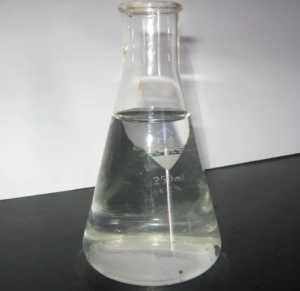
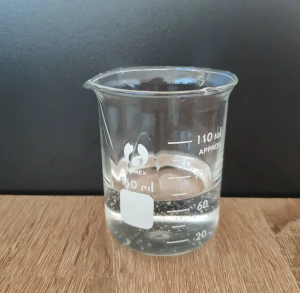
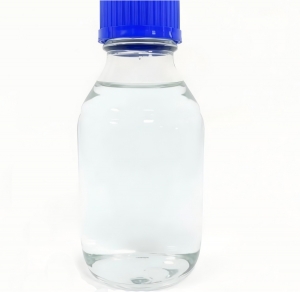
SODIUM LAURETH SULFATE 1EO CAS NO: 9004-82-4
Sodium Laureth Sulfate 1EO refers to sodium lauryl ether sulfate, a common anionic surfactant, where 1EO indicates that the lauryl hydrophobic chain in its molecule is connected to one ethoxy (-CH₂CH₂O-) unit. Basic Structure and Properties Chemical Structure: Its general structural formula is:CH3(CH2)10CH2(OCH2CH2)1OSO3Na. It consists of three parts: Hydrophobic group: Lauryl group (C12 alkyl chain) Connecting group: 1 ethoxy unit Hydrophilic group: Sodium sulfate ester group Core Performance Excellent surface activity: It can significantly reduce the surface tension of water, and has strong emulsifying, detergency, and foaming abilities, producing rich and stable foam. Improved water solubility: Compared to sodium lauryl sulfate (SLS) without ethoxy groups, the introduction of one ethoxy unit improves its water solubility, making it less likely to precipitate at low temperatures. Optimized mildness: It is slightly less irritating than SLS, but still belongs to the category of moderately irritating surfactants, suitable for cleaning products. Hard water resistance: It has stronger hard water resistance than SLS, maintaining good cleaning performance in water containing calcium and magnesium ions. Compatibility: It can be compounded with nonionic, cationic (caution is needed to avoid precipitation), and other anionic surfactants. Main Application Areas Personal care products: Used in shampoos, shower gels, facial cleansers, hand soaps, etc., playing a core role in cleaning and foaming. Due to the low number of EO units, it has strong detergency and is often compounded with mild surfactants (such as cocamidopropyl betaine) to reduce irritation. Household cleaning products: Used in laundry detergents, dishwashing detergents, hard surface cleaners, etc., utilizing its emulsifying and foaming abilities to improve cleaning efficiency. Industrial field: It can be used as an emulsifier in pesticide and paint formulations, and also as a wetting agent in the textile industry and a degreasing agent in the leather industry. Differences from similar products Product Eo Number Water-Soluble Mildness Detergency SLS 0 General Lower Strong SLES-1EO 1 Better Moderate Stronger SLES-2EO/3EO 2-3 Very Good Higher Moderate Precautions: At high concentrations, it can be irritating to the skin and eyes. The proportion added to formulations needs to be controlled (usually 5%-15% in personal care products). Avoid high temperatures and strong acidic environments during storage, otherwise hydrolysis may occur, reducing its activity.Tags : SODIUM LAURETH SULFATE 1EO CAS NO: 9004-82-4 SODIUM LAURETH 1 SULFATE(SLE1S) SODIUM LAURETH SULPHATE 1EO SODIUM LAURETH SULFATE SLE1S CAS NO: 9004-82-4 Fatty alcohol polyoxyethylene ether, sodium sulfate
-
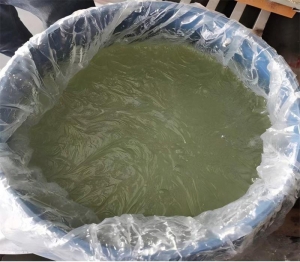
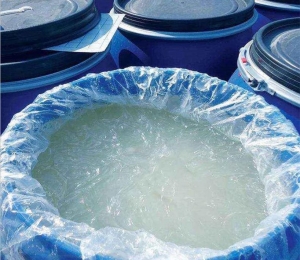
SODIUM LAURETH SULPHATE 3EO CAS NO: 9004-82-4
Sodium Laureth Sulfate 3EO (SLES-3EO) is an anionic surfactant. 3EO indicates that its molecule contains 3 ethoxy (-CH₂CH₂O-) units attached to the lauryl hydrophobic chain. It is a widely used mild surfactant in the daily chemical and cleaning industries. Basic Structure and Properties Chemical Structure: The general structural formula is: CH3(CH2)10CH2(OCH2CH2)3OSO3Na. It mainly consists of three parts: Hydrophobic group: Lauryl group (C₁₂ alkyl chain) Connecting group: 3 ethoxy units Hydrophilic group: Sodium sulfate ester group Core Performance Outstanding Mildness: Compared to SLS (0EO) and SLES-1EO, the introduction of 3 ethoxy units significantly reduces skin and eye irritation, making it a commonly used mild cleansing and foaming ingredient in personal care products. Excellent Water Solubility: The increased number of ethoxy units enhances hydrophilicity, maintaining good solubility even at low temperatures and preventing precipitation and stratification. Balanced Foaming and Cleaning: It produces rich and dense foam that is easy to rinse off, and has moderate cleaning power, effectively cleaning grease and dirt without excessive degreasing that leads to dry skin. Strong Hard Water Resistance: It exhibits good stability in hard water containing calcium and magnesium ions, and the cleaning effect does not significantly decrease. Good Compatibility: It can be compounded with non-ionic and amphoteric surfactants (such as cocamidopropyl betaine, alkyl glycosides), further improving mildness and foaming properties; caution is needed when compounding with cationic surfactants to avoid precipitation. Main Application Areas Personal Care Products It is a core ingredient in shampoos, shower gels, facial cleansers, and baby care products, especially suitable for sensitive skin and infant care formulations, with a typical addition ratio of 5%–20%. Household Cleaning Products Used in dishwashing detergents, laundry detergents, hand soaps, etc., balancing cleaning power and mildness, reducing irritation to the skin of the hands. Industrial Applications It can be used as a wetting agent in the textile industry, a pesticide emulsifier, and a leather degreasing agent, achieving efficient processing under mild conditions. Differences from similar products Product Eo Number Water-Soluble Mildness Detergency SLS 0 General Lower Strong SLES-1EO 1 Better Moderate Stronger SLES-2EO/3EO 2-3 Very Good Higher Moderate Precautions: Although generally mild, high concentrations (>20%) may still irritate sensitive skin; therefore, the amount used in formulations should be controlled. Store in a sealed container in a cool, dry place, avoiding contact with strong acids and high temperatures to prevent hydrolysis and loss of activity.Tags : SODIUM LAURETH SULPHATE 3EO CAS NO: 9004-82-4 3EO CAS NO: 9004-82-4 SODIUM LAURETH SULPHATE SLES-3EO CAS NO: 9004-82-4 SLES-3EO
-
Ectoine CAS:96702-03-3
Name: Ectoine CAS No.: 96702-03-3 Appearance: White powder Molecular formula: C6H10O2N2 Molecular Weight: 142.2 g/molTags : Ectoine CAS:96702-03-3 Cosmetic grade Ectoine Ectoine powder Ectoine CAS:96702-03-3 Cosmetic Ectoine powder
-
L-Ergothioneine ERGO EGT CAS: 497-30-3
Name: L-Ergothioneine,ergothioneine, ERGO, EGT CAS No.: 497-30-3 Appearance: White or off-white powder Molecular formula: C9H15N3O2S Molecular Weight: 229.3Tags : L-Ergothioneine ergothioneine L-Ergothioneine ERGO L-Ergothioneine EGT L-Ergothioneine ERGO EGT CAS: 497-30-3 L-Ergothioneine CAS: 497-30-3
-
Hyaluronic Acid CAS: 9004-61-9
Name:Hyaluronic Acid CAS No.: 9004-61-9 Appearance: White powder Molecular formula: C14H22NNaO11 Molecular Weight: 403.31Tags : Hyaluronic Acid Hyaluronic Acid CAS: 9004-61-9 food grade Hyaluronic Acid CAS: 9004-61-9 Pharmaceutical grade Hyaluronic Acid food grade Hyaluronic Acid Pharmaceutical grade Hyaluronic Acid CAS: 9004-61-9
-
1,4-butanediol CAS:110-63-4
Name: 1,4-butanediol CAS No.: 110-63-4 Appearance: Colorless oily liquid Molecular formula: C4H10O2 Molecular Weight: 90.12Tags : 1,4-butanediol CAS:110-63-4 1,4-butanediol CAS:110-63-4 1,4-butanediol chemical 1,4-butanediol agricultural chemical
-
1,3-Butanediol CAS:107-88-0
Name: 1,3-Butanediol CAS No.: 107-88-0 Appearance: Colorless, viscous liquid Molecular formula: C4H10O2 Molecular Weight: 90.121Tags : 1,3-Butanediol CAS:107-88-0 1,3-Butanediol CAS:107-88-0 1,3-butylene glycol 1,3-Butanediol cosmetics 1,3-Butanediol industry
-
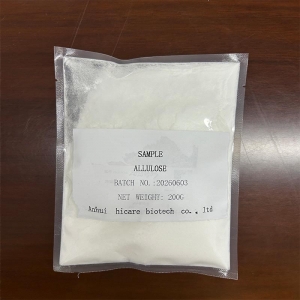
Allulose CAS NO.23140-52-5
Description: Aloulose is a rare sugar naturally found in foods such as figs and raisins, and is a type of sugar substitute. Its taste is highly similar to sucrose, but it provides almost no calories and does not cause drastic fluctuations in blood sugar. The taste, sweetness, and even the coking reaction during baking are very similar to white sugar, and do not have a noticeable metallic aftertaste or coolness like some sugar substitutes. Application: Aloulose is mainly used in beverages, baking, dairy products, pharmaceuticals, daily chemical products, etc. Adding D-alloulose to food not only increases its gelling ability, but also undergoes Maillard reaction with food protein to improve its flavor. Compared to D-fructose and D-glucose, D-aloulose can generate more antioxidant Maillard reaction products, maintaining the antioxidant level of food for a longer period of time. In 2011, D-alloulose was certified safe by the FDA and can be used as an additive in the food and dietary fields. Package: 20KG paper plastic bag, 25KG paper plastic bag, 500KG ton bag, 850KG ton bag, 1200KG ton bag Storage method: Sealed in a cool dry environment.Tags : Allulose CAS NO.23140-52-5 crystalline allulose CAS NO.23140-52-5 allulose sweetener Dietary Supplement Nutritional Supplement allulose sugar
-
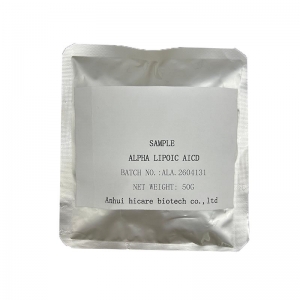
Alpha Lipoic Acid CAS NO.62-46-4
Description: Alpha Lipoic Acid CAS NO.62-46-4 with the molecular formula C8H14O2S2, is an organic compound that can act as a coenzyme to participate in acyl transfer in the metabolism of substances in the body, and can eliminate free radicals that cause accelerated aging and disease. Lipoic acid enters cells after being absorbed by the intestine in the body, possessing both lipid and water solubility properties.Tags : Alpha Lipoic Acid CAS NO.62-46-4 Alpha Lipoic Acid supplement CAS 62-46-4 DL-Lipoic acid CAS 62-46-4 DL-alpha-Lipoic acid CAS 62-46-4 DL-Thioctic acid CAS 62-46-4 Best Alpha Lipoic Acid supplement 62-46-4;1077-28-7;57828-26-9
-
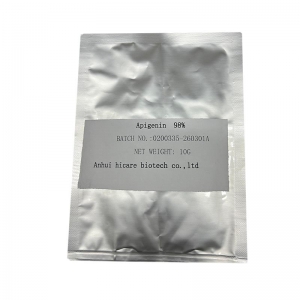
Apigenin CAS NO.520-36-5
Name: Apigenin CAS No.: 520-36-5 Molecular formula: C15H10O5 Molecular weight: 270.2369 Chemical name: 4 ', 5,7-trihydroxyflavone Plant source: Matricaria recutita Linn Specification: 98% min Packaging: 1kg/bag; 5kg/bag; 25kg/drum Molecular structure:Tags : Apigenin CAS NO.520-36-5 C.I. Natural Yellow 1 CAS 520-36-5 5,7-dihydroxy-2-(4-hydroxyphenyl)-4H-chromen-4-one 5,7,4'-trihydroxyflavone 520-36-5
-
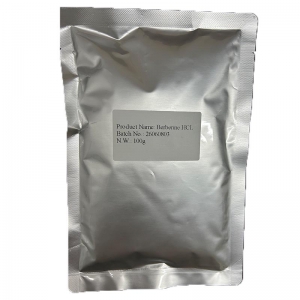
Berberine hydrochloride CAS NO.633-65-8
Name: Berberine hydrochloride(Berberine hcl) CAS No.: 633-65-8 Molecular formula: C20H19ClNO4 Molecular weight: 372.8216 Density and melting point: The density is about 1.654g/cm ³; Melting point approximately 200-220 ℃ (decomposition)Tags : Berberine hydrochloride CAS NO.633-65-8 Berberine hcl CAS 633-65-8 Berberine chloride CAS 633-65-8 ine HCl CAS 633-65-8 1,3-benzodioxolo[5,6-a]benzo[g]quinolizinium 5,6-dihydro-9,10-dimethoxy-, hydrochloride (1:1)
-
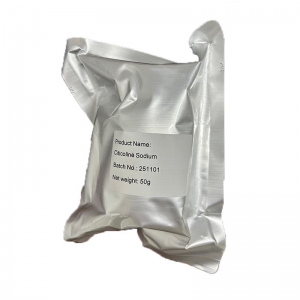
Citicoline Sodium CAS NO.33818-15-4
Name: Citicoline Sodium CAS No.: 33818-15-4 Molecular formula: C14H25N4NaO11P2 Molecular weight: 510.31 Appearance: White powder Content: ≥ 99% Clarity: Clarification Related substances: ≤ 0.5% Packaging: 5kg/drum; 10kg/drum; 25kg/drum Molecular structure:Tags : Citicoline Sodium CAS NO.33818-15-4 cytidine 5'-diphosphocholine sodium salt dihydrate Cytidine 5'-diphosphocholine monosodium salt CAS 33818-15-4
 online service


