


 call us : +8613866722531
 send a message : pweiping@techemi.com

call us : +8613866722531
send a message : pweiping@techemi.com
Name: Chlorotrimethylsilane CAS number: 75-77-4 Molecular formula: C3H9ClSi Molecular weight: 108.64 EINECS number: 200-900-5 Mol file: 75-77-4.mol
Name: Ethoxytrimethylsilane CAS number: 1825-62-3 Molecular formula: C5H14OSi Molecular weight: 118.25 EINECS number: 217-370-6 Mol file: 1825-62-3.mol
Specification English name: Dimethyldimethoxysilane CAS number: 1112-39-6 Molecular formula: C4H12O2Si Molecular weight: 120.22 EINECS number: 214 189 4 Mol file: 1112-39-6.mol Applications As a structural control agent, chain extender, and filler treatment agent, it is widely used in the treatment of organic silica gel and white carbon black Purpose As a structural control agent, chain extender, and filler treatment agent, it is widely used in the treatment of organic silica gel and white carbon black. This product is used as a structural control agent and chain extender to improve mechanical processing performance, extend the storage time of rubber blends, and can replace hydroxyl silicone oil for use. Widely used in the treatment of organic silicone and white carbon black Purpose Dimethyldimethoxysilane is used as a structural control agent and chain extender to improve mechanical processing performance, extend the storage time of rubber blends, and can replace hydroxy silicone oil....
Properties of trimethyliodosilane Melting point<0 ° C Boiling point 106 ° C (lit.) Density 1.406 g/mL at 25 ° C (lit.) Refractive index n20/D 1.471 (lit.) Flash point − 25 ° F Storage conditions -20 ° C Solubility Reacts Form Liquid Specific gravity 1.47 Clear colors to reddish Water solubility reactions Sensitivity: Moisture&Light Sensitivity Hydrolysis sensitivity 8: Reacts quickly with moisture, water, protoc solvents BRN 1731136 Stability Sensitivity (Reactive) InchiKey CSRZQMIRAZTJOY-UHFFFFAOYSA-N CAS Database 16029-98-4 (CAS DataBase Reference) NIST Chemical Information Iodotrimethylsilane (16029-98-4) EPA Chemical Information Silane, iodotrimethyl - (16029-98-4)
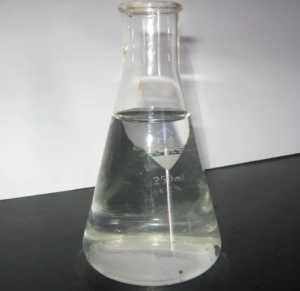
Properties of Hexamethyldisilane Melting point 9-12 ° C (lit.) Boiling point 112-114 ° C (lit.) Density 0.715 g/mL at 25 ° C (lit.) Refractive index n20/D 1.422 (lit.) Flash point 29 ° F Storage conditions Store at<=20 ° C Sol common organic solvents; Insul H2O Form liquid Specific gravity 0.729 Colorless Insoluble in water Double in alcohol, ether and acetone Hydrolysis sensitivity 1: no significant reaction with acute systems BRN 1633463 Stability InchiKey NEXSMEBSBIABKL-UHFFFAOYSA-N CAS Database 1450-14-2 (CAS DataBase Reference) NIST Chemical Substance Information Disilane, hexagonal - (1450-14-2) EPA Chemical Substance Information Disilane, hexagonal - (1450-14-2)
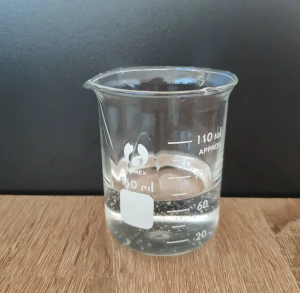
Introduction: Hexamethyldisiloxane (silicone ether, MM sealing agent) is a colorless and transparent liquid that is prone to deliquescence. Insoluble in water, soluble in various organic solvents. Used as silicone oil, silicone rubber, pharmaceuticals, gas chromatography stationary liquids, analytical reagents, hydrophobic agents, etc. Obtained by hydrolysis of trimethylchlorosilane. The physical properties of hexamethyldisiloxane colorless and transparent liquids. Easily deliquescent, flammable, and in contact with high heat, open flames, and strong oxidizing agents, there is a risk of combustion. Boiling point 99.5 ℃. Flash point -1.1 ℃. Relative density (d2525) 0.7606. The refractive index is 1.3750. Insoluble in water, soluble in various organic solvents. Hexamethyldisiloxane is an important primary organic silicon raw material, often used as a capping agent in the production of silicone oil, or as a cleaning agent for silicone rubber, pharmaceuticals, gas c...

Anhui Techchem Industrial Co.,Ltd. will participate in the Shanghai CPHI China 2026 exhibition. The 24th CPHI China 2026 will grandly kick off at the Shanghai New International Expo Center from June 1...
Inhibiting the production of the ‘happiness’ hormone – serotonin – in rice plants, increases their resistance to two of the world’s most destructive and costly insect pests, new research has shown.
The study, published this week in Nature Plants, shows that by suppressing the production of serotonin, rice plants become more resistant to their two most serious predators – the brown plant-hopper and the striped stem borer.
Using gene editing techniques on rice plants to switch off the serotonin-producing gene, the team found the plants also produced higher levels of salicylic acid – a chemical similar to aspirin.
Conversely, adding serotonin to the resistant rice led to a loss in insect resistance.
Led by experts from Newcastle University, UK, and Zhejiang University, China, the team says these new findings demonstrate the important role that serotonin plays in plant defence and opens up new opportunities for breeding insect-resistant varieties of rice and other cereal crops.
Professor Angharad Gatehouse, co-author on the study and a Professor of invertebrate molecular biology at Newcastle University, explains:
“Recent research has suggested that, even though they lack a nervous system, plants are much more responsive to their surroundings than was previously thought.
“This example shows how the same chemicals that modify behaviour in animals can be used to regulate plant defence against insect pests and is another reminder that all living organisms have more similarities than differences at a basic level.”
Rice is one of the world’s most important foods and the brown plant-hopper and striped stem borer are the two most serious pests in rice production causing losses of billions of dollars.
The plant hopper is a sap-sucking pest, which transmits plant viruses, as well as causing “hopper burn” where blockage of the water-carrying vascular tissue causes plants to wilt and die causing significant yield loss.
The borer is a chewing insect which feeds on young plants causing ‘dead hearts’ and ‘white heads’ and again resulting in significant yield losses.
“Indiscriminate use of chemical pesticides has resulted in these two pests becoming increasingly difficult to control,” explains Professor Gatehouse.
“The development of insect-resistant rice varieties is seen as a viable and ecologically sustainable approach for controlling these devastating insect pests.
Serotonin is ubiquitous across all forms of life and in mammals it is an important neurotransmitter.
In humans, serotonin helps to regulate mood, boost our appetite, regulate digestion and helps with sleep and memory.
In plants, serotonin is involved in growth and development, while in insects it is used to seek out resources and food.
Analysing the plant’s response to insect attack, the team found both serotonin and salicylic acid were produced in response to an infestation but supressing serotonin production made the rice plants more pest-resistant.
And by disabling the gene responsible for making serotonin, the team were able to further increase levels of salicylic acid in the plant and increase its resistance.
Anhui Sinotech Industrial Co.,Ltd is a professional Chemical Pesticides Manufacturer,no chemical residues and environmental friendly products,Call us now!
 online service
 +8613866722531
 pweiping@techemi.com
 pweiping
 +8613866722531