


 call us : +8613866722531
 send a message : pweiping@techemi.com

call us : +8613866722531
send a message : pweiping@techemi.com

Name: Chlorotrimethylsilane CAS number: 75-77-4 Molecular formula: C3H9ClSi Molecular weight: 108.64 EINECS number: 200-900-5 Mol file: 75-77-4.mol
Name: Ethoxytrimethylsilane CAS number: 1825-62-3 Molecular formula: C5H14OSi Molecular weight: 118.25 EINECS number: 217-370-6 Mol file: 1825-62-3.mol
Specification English name: Dimethyldimethoxysilane CAS number: 1112-39-6 Molecular formula: C4H12O2Si Molecular weight: 120.22 EINECS number: 214 189 4 Mol file: 1112-39-6.mol Applications As a structural control agent, chain extender, and filler treatment agent, it is widely used in the treatment of organic silica gel and white carbon black Purpose As a structural control agent, chain extender, and filler treatment agent, it is widely used in the treatment of organic silica gel and white carbon black. This product is used as a structural control agent and chain extender to improve mechanical processing performance, extend the storage time of rubber blends, and can replace hydroxyl silicone oil for use. Widely used in the treatment of organic silicone and white carbon black Purpose Dimethyldimethoxysilane is used as a structural control agent and chain extender to improve mechanical processing performance, extend the storage time of rubber blends, and can replace hydroxy silicone oil....
Properties of trimethyliodosilane Melting point<0 ° C Boiling point 106 ° C (lit.) Density 1.406 g/mL at 25 ° C (lit.) Refractive index n20/D 1.471 (lit.) Flash point − 25 ° F Storage conditions -20 ° C Solubility Reacts Form Liquid Specific gravity 1.47 Clear colors to reddish Water solubility reactions Sensitivity: Moisture&Light Sensitivity Hydrolysis sensitivity 8: Reacts quickly with moisture, water, protoc solvents BRN 1731136 Stability Sensitivity (Reactive) InchiKey CSRZQMIRAZTJOY-UHFFFFAOYSA-N CAS Database 16029-98-4 (CAS DataBase Reference) NIST Chemical Information Iodotrimethylsilane (16029-98-4) EPA Chemical Information Silane, iodotrimethyl - (16029-98-4)
Properties of Hexamethyldisilane Melting point 9-12 ° C (lit.) Boiling point 112-114 ° C (lit.) Density 0.715 g/mL at 25 ° C (lit.) Refractive index n20/D 1.422 (lit.) Flash point 29 ° F Storage conditions Store at<=20 ° C Sol common organic solvents; Insul H2O Form liquid Specific gravity 0.729 Colorless Insoluble in water Double in alcohol, ether and acetone Hydrolysis sensitivity 1: no significant reaction with acute systems BRN 1633463 Stability InchiKey NEXSMEBSBIABKL-UHFFFAOYSA-N CAS Database 1450-14-2 (CAS DataBase Reference) NIST Chemical Substance Information Disilane, hexagonal - (1450-14-2) EPA Chemical Substance Information Disilane, hexagonal - (1450-14-2)
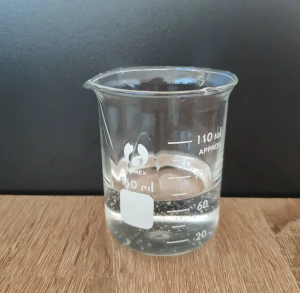
Introduction: Hexamethyldisiloxane (silicone ether, MM sealing agent) is a colorless and transparent liquid that is prone to deliquescence. Insoluble in water, soluble in various organic solvents. Used as silicone oil, silicone rubber, pharmaceuticals, gas chromatography stationary liquids, analytical reagents, hydrophobic agents, etc. Obtained by hydrolysis of trimethylchlorosilane. The physical properties of hexamethyldisiloxane colorless and transparent liquids. Easily deliquescent, flammable, and in contact with high heat, open flames, and strong oxidizing agents, there is a risk of combustion. Boiling point 99.5 ℃. Flash point -1.1 ℃. Relative density (d2525) 0.7606. The refractive index is 1.3750. Insoluble in water, soluble in various organic solvents. Hexamethyldisiloxane is an important primary organic silicon raw material, often used as a capping agent in the production of silicone oil, or as a cleaning agent for silicone rubber, pharmaceuticals, gas c...

Anhui Techchem Industrial Co.,Ltd. will participate in the Shanghai CPHI China 2026 exhibition. The 24th CPHI China 2026 will grandly kick off at the Shanghai New International Expo Center from June 1...
Teagasc have concluded their field study which investigated both the environmental and agronomic impact of a GM potato variety genetically engineered to resist late blight disease, caused by Phytophthora infestans.
Potato late blight can rapidly destroy potato crops with growers commonly having to resort to spraying their crops with fungicides on a near weekly basis.
Teagasc research indicates that combining a cisgenic blight resistant potato with advanced Integrated management systems can reduce the environmental impact of potato production by over 95pc.
As part of the EU funded ‘AMIGA’ project and in collaboration with Wageningen University, Teagasc looked at issues such as the efficacy of disease control and the resulting environmental impact during cultivation of a susceptible potato variety (Désirée) and two different resistant potato varieties: Sarpo Mira, developed through conventional breeding, and a resistant version of the Désirée which received a resistance gene from a wild potato through cisgenesis.
Cisgenesis allows enrichment of existing potato varieties in as little as 3 years versus current potato breeding programmes that require 12 years or more to produce a novel variety.
After undergoing independent peer-review, the findings from 3 years of field evaluations have been published in the scientific journals European Journal of Agronomy and BMC Ecology.

The research, conducted in both The Netherlands and Ireland, has
concluded that integrated production strategies that include varieties
with enhanced genetic resistance against late blight disease can reduce
the average fungicide input by 80-90pc, without compromising control
efficacy or yield.
This can provide more durable control options for farmers while significantly reducing the crop’s environmental footprint.
The international team developed an ‘IPM2.0’ approach which includes late blight resistant varieties and builds on the preventive principles of Integrated Pest Management.
IPM2.0 could permit growers to strongly reduce the necessary input of chemical control agents.
It also ensures a yield equivalent to current practise, protects the limited natural germplasm used to create the resistant varieties and significantly reduces the environmental impact of potato cultivation as a whole.
The IPM2.0 approach adds three extra components to the current control strategy for potato late blight: the use of resistant varieties, active monitoring of the late blight pathogen and a ‘do not spray unless’ strategy, which dictates that a grower only needs to apply fungicides when a resistant variety is at risk of infection due to pathogen adaptation.
This strategy ensures potato crops are protected at all times while minimising the risk that resistance genes lose their efficacy.
Anhui Sinotech Industrial Co.,Ltd is a professional Chemical Fungicides Wholesale,factory prices, high-quality service, is your trustworthy company.
 online service
 +8613866722531
 pweiping@techemi.com
 pweiping
 +8613866722531