


 call us : +8613866722531
 send a message : pweiping@techemi.com

call us : +8613866722531
send a message : pweiping@techemi.com
Name: Chlorotrimethylsilane CAS number: 75-77-4 Molecular formula: C3H9ClSi Molecular weight: 108.64 EINECS number: 200-900-5 Mol file: 75-77-4.mol
Name: Ethoxytrimethylsilane CAS number: 1825-62-3 Molecular formula: C5H14OSi Molecular weight: 118.25 EINECS number: 217-370-6 Mol file: 1825-62-3.mol
Specification English name: Dimethyldimethoxysilane CAS number: 1112-39-6 Molecular formula: C4H12O2Si Molecular weight: 120.22 EINECS number: 214 189 4 Mol file: 1112-39-6.mol Applications As a structural control agent, chain extender, and filler treatment agent, it is widely used in the treatment of organic silica gel and white carbon black Purpose As a structural control agent, chain extender, and filler treatment agent, it is widely used in the treatment of organic silica gel and white carbon black. This product is used as a structural control agent and chain extender to improve mechanical processing performance, extend the storage time of rubber blends, and can replace hydroxyl silicone oil for use. Widely used in the treatment of organic silicone and white carbon black Purpose Dimethyldimethoxysilane is used as a structural control agent and chain extender to improve mechanical processing performance, extend the storage time of rubber blends, and can replace hydroxy silicone oil....
Properties of trimethyliodosilane Melting point<0 ° C Boiling point 106 ° C (lit.) Density 1.406 g/mL at 25 ° C (lit.) Refractive index n20/D 1.471 (lit.) Flash point − 25 ° F Storage conditions -20 ° C Solubility Reacts Form Liquid Specific gravity 1.47 Clear colors to reddish Water solubility reactions Sensitivity: Moisture&Light Sensitivity Hydrolysis sensitivity 8: Reacts quickly with moisture, water, protoc solvents BRN 1731136 Stability Sensitivity (Reactive) InchiKey CSRZQMIRAZTJOY-UHFFFFAOYSA-N CAS Database 16029-98-4 (CAS DataBase Reference) NIST Chemical Information Iodotrimethylsilane (16029-98-4) EPA Chemical Information Silane, iodotrimethyl - (16029-98-4)
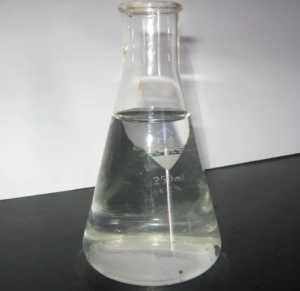
Properties of Hexamethyldisilane Melting point 9-12 ° C (lit.) Boiling point 112-114 ° C (lit.) Density 0.715 g/mL at 25 ° C (lit.) Refractive index n20/D 1.422 (lit.) Flash point 29 ° F Storage conditions Store at<=20 ° C Sol common organic solvents; Insul H2O Form liquid Specific gravity 0.729 Colorless Insoluble in water Double in alcohol, ether and acetone Hydrolysis sensitivity 1: no significant reaction with acute systems BRN 1633463 Stability InchiKey NEXSMEBSBIABKL-UHFFFAOYSA-N CAS Database 1450-14-2 (CAS DataBase Reference) NIST Chemical Substance Information Disilane, hexagonal - (1450-14-2) EPA Chemical Substance Information Disilane, hexagonal - (1450-14-2)
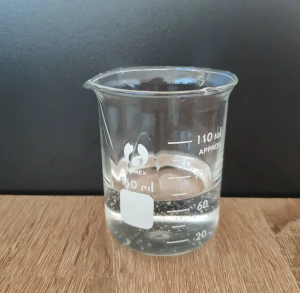
Introduction: Hexamethyldisiloxane (silicone ether, MM sealing agent) is a colorless and transparent liquid that is prone to deliquescence. Insoluble in water, soluble in various organic solvents. Used as silicone oil, silicone rubber, pharmaceuticals, gas chromatography stationary liquids, analytical reagents, hydrophobic agents, etc. Obtained by hydrolysis of trimethylchlorosilane. The physical properties of hexamethyldisiloxane colorless and transparent liquids. Easily deliquescent, flammable, and in contact with high heat, open flames, and strong oxidizing agents, there is a risk of combustion. Boiling point 99.5 ℃. Flash point -1.1 ℃. Relative density (d2525) 0.7606. The refractive index is 1.3750. Insoluble in water, soluble in various organic solvents. Hexamethyldisiloxane is an important primary organic silicon raw material, often used as a capping agent in the production of silicone oil, or as a cleaning agent for silicone rubber, pharmaceuticals, gas c...

Anhui Techchem Industrial Co.,Ltd. will participate in the Shanghai CPHI China 2026 exhibition. The 24th CPHI China 2026 will grandly kick off at the Shanghai New International Expo Center from June 1...
The United States is seeking better access for imports of genetically modified crops into China as part of a trade deal currently under discussion between the two sides, said two people familiar with the matter.

Genetically modified corn are seen cultivated at a greenhouse in Syngenta Biotech Center in Beijing, China, February 19, 2016. REUTERS/Kim Kyung-Hoon/File Photo
The subject, long a major irritant in agricultural trade between the countries, is a main issue for the U.S. Department of Agriculture, said a biotech industry source with knowledge of USDA discussions.
“I can say with full confidence that biotech is one
of the key issues for USDA in this conversation with the Chinese,” the
source said.
The USDA did not respond to requests for comment on Wednesday.
China’s Ministry of Agriculture and Rural Affairs, which regulates approvals of genetically modified, or GMO crops, did not respond to a fax seeking comment on whether such demands had been made.
China’s Ministry of Commerce also did not respond to a fax on the issue.
After months of escalating trade tension that led Beijing to threaten hefty tariffs on imports of major U.S. farm products, the two sides are nearing a deal that could see China buying more American farm goods, sources said on Tuesday.
Those goods are expected to include top U.S. farm products such as soybeans and grains, as well as beef and other meat. U.S. exporters are currently grappling with tough Chinese quarantine requirements on many of their products, including corn, soybeans and pork.
China will import record volumes of U.S. oil and is likely to ship more U.S. soy after Beijing signaled to state-run refiners and grains purchasers they should buy more to help ease tensions between the two top economies, trade sources said on Wednesday.[nL2N1SU296]
While the specific demands regarding U.S. biotech are not known, Washington has repeatedly cited the issue in trade talks with Beijing in recent years.
China does not permit
planting of GMO food crops, but it does allow the import of GMO soybeans
and corn for use in its huge animal feed industry.
However the
approval process for new GMO strains is slow, unpredictable and not
based on science, the biotech industry has said.
As the world’s top buyer of soybeans and a major buyer of other grains, China’s slow approval process stalls trade by forcing agrichemical firms to restrict sales of new products to American farmers until they get Beijing’s go-ahead.
That can take several years, according to earlier industry complaints.
China promised to speed up a review of pending applications during 100-day trade talks with the United States last year, and it approved four new GMO products for import in the weeks following those talks.
But it has not approved any other products since then. The industry had expected another meeting of its scientific panel, the National Biosafety Committee, to take place late last year, but no meeting occurred, according to industry sources.
“Biotech was among one of the key issues in the 100-day plan last year and there’s still a lot of unresolved issues from that plan,” the source with knowledge of USDA’s discussions said.
DowDuPont Inc (DWDP.N) is waiting for China to approve imports of U.S. biotech soybeans under its Enlist brand, which have tolerance to a chemical called 2,4-D, used as a herbicide.
Without Beijing’s approval for Enlist E3 soybeans, the company launched the seed in the United States this year under a program that restricts where farmers deliver their harvests, limiting sales. Dow first submitted E3 soybeans to China for import approval in 2013 and had previously hoped to launch them in the United States in 2015.
Syngenta, which is now owned by Chinese chemical company ChemChina [CNNCC.UL], is waiting for Beijing to approve imports of a variety of U.S. biotech soybeans known as 0H2, which were submitted for review in 2014, a Syngenta spokesman said. Last year, China cleared imports of Syngenta’s Agrisure Duracade corn as part of the 100-day plan.
Monsanto Co (MON.N) has
been seeking approval for two alfalfa products since 2011 and one since
2015, according to the company. Bayer AG (BAYGn.DE), which is close to
acquiring Monsanto, is waiting for Beijing to clear a canola product the
company originally submitted for review in 2012.
Another industry source said China needed to overhaul its regulatory system, and not simply approve some pending applications.
“Results in the past year were not satisfactory,” he added.
Beijing has in the past held back approvals of imported GMO products amid concerns about anti-GMO sentiment in the country.
Anhui Sinotech Industrial Co.,Ltd is a professional supplier of various Herbicide products, the main products are Metribuzin Herbicide,Agrochemical Herbicide etc.If you want to know,call us now!
 online service
 +8613866722531
 pweiping@techemi.com
 pweiping
 +8613866722531