


 call us : +8613866722531
 send a message : pweiping@techemi.com

call us : +8613866722531
send a message : pweiping@techemi.com
Name: Chlorotrimethylsilane CAS number: 75-77-4 Molecular formula: C3H9ClSi Molecular weight: 108.64 EINECS number: 200-900-5 Mol file: 75-77-4.mol
Name: Ethoxytrimethylsilane CAS number: 1825-62-3 Molecular formula: C5H14OSi Molecular weight: 118.25 EINECS number: 217-370-6 Mol file: 1825-62-3.mol
Specification English name: Dimethyldimethoxysilane CAS number: 1112-39-6 Molecular formula: C4H12O2Si Molecular weight: 120.22 EINECS number: 214 189 4 Mol file: 1112-39-6.mol Applications As a structural control agent, chain extender, and filler treatment agent, it is widely used in the treatment of organic silica gel and white carbon black Purpose As a structural control agent, chain extender, and filler treatment agent, it is widely used in the treatment of organic silica gel and white carbon black. This product is used as a structural control agent and chain extender to improve mechanical processing performance, extend the storage time of rubber blends, and can replace hydroxyl silicone oil for use. Widely used in the treatment of organic silicone and white carbon black Purpose Dimethyldimethoxysilane is used as a structural control agent and chain extender to improve mechanical processing performance, extend the storage time of rubber blends, and can replace hydroxy silicone oil....
Properties of trimethyliodosilane Melting point<0 ° C Boiling point 106 ° C (lit.) Density 1.406 g/mL at 25 ° C (lit.) Refractive index n20/D 1.471 (lit.) Flash point − 25 ° F Storage conditions -20 ° C Solubility Reacts Form Liquid Specific gravity 1.47 Clear colors to reddish Water solubility reactions Sensitivity: Moisture&Light Sensitivity Hydrolysis sensitivity 8: Reacts quickly with moisture, water, protoc solvents BRN 1731136 Stability Sensitivity (Reactive) InchiKey CSRZQMIRAZTJOY-UHFFFFAOYSA-N CAS Database 16029-98-4 (CAS DataBase Reference) NIST Chemical Information Iodotrimethylsilane (16029-98-4) EPA Chemical Information Silane, iodotrimethyl - (16029-98-4)
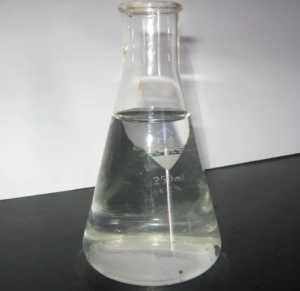
Properties of Hexamethyldisilane Melting point 9-12 ° C (lit.) Boiling point 112-114 ° C (lit.) Density 0.715 g/mL at 25 ° C (lit.) Refractive index n20/D 1.422 (lit.) Flash point 29 ° F Storage conditions Store at<=20 ° C Sol common organic solvents; Insul H2O Form liquid Specific gravity 0.729 Colorless Insoluble in water Double in alcohol, ether and acetone Hydrolysis sensitivity 1: no significant reaction with acute systems BRN 1633463 Stability InchiKey NEXSMEBSBIABKL-UHFFFAOYSA-N CAS Database 1450-14-2 (CAS DataBase Reference) NIST Chemical Substance Information Disilane, hexagonal - (1450-14-2) EPA Chemical Substance Information Disilane, hexagonal - (1450-14-2)
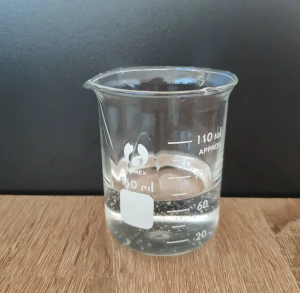
Introduction: Hexamethyldisiloxane (silicone ether, MM sealing agent) is a colorless and transparent liquid that is prone to deliquescence. Insoluble in water, soluble in various organic solvents. Used as silicone oil, silicone rubber, pharmaceuticals, gas chromatography stationary liquids, analytical reagents, hydrophobic agents, etc. Obtained by hydrolysis of trimethylchlorosilane. The physical properties of hexamethyldisiloxane colorless and transparent liquids. Easily deliquescent, flammable, and in contact with high heat, open flames, and strong oxidizing agents, there is a risk of combustion. Boiling point 99.5 ℃. Flash point -1.1 ℃. Relative density (d2525) 0.7606. The refractive index is 1.3750. Insoluble in water, soluble in various organic solvents. Hexamethyldisiloxane is an important primary organic silicon raw material, often used as a capping agent in the production of silicone oil, or as a cleaning agent for silicone rubber, pharmaceuticals, gas c...
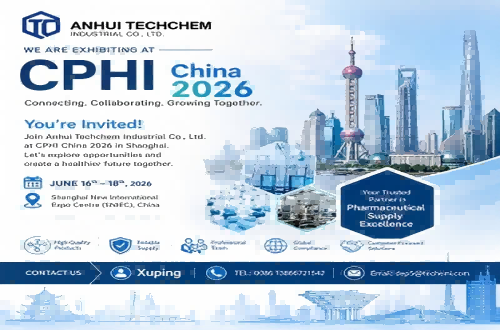
Anhui Techchem Industrial Co.,Ltd. will participate in the Shanghai CPHI China 2026 exhibition. The 24th CPHI China 2026 will grandly kick off at the Shanghai New International Expo Center from June 1...
A new study has isolated a gene controlling shape and size of spikelets in wheat in a breakthrough which could help breeders deliver yield increases in one of the world’s most important crops.
The team from the John Innes Centre say the underlying genetic mechanism they have found is also relevant to inflorescence (floral) architecture in a number of other major cereals including corn, barley and rice.
The genetic identification of an agronomically-relevant trait represents a significant milestone in research on wheat; a crop with a notoriously complex genome.
The findings, published today in the journal The Plant Cell, give breeders a new tool to accelerate the global quest to improve wheat. The study also highlights a range of next generation techniques available for fundamental research into wheat, the world’s most abundantly produced crop.
The Wheat Initiative, which co-ordinates global research for wheat, has identified floral architecture as one of the key traits which must be improved if a 1.6% yield increase needed to feed a growing world population is to be reached.
Dr Scott Boden from the John Innes Centre, whose crop genetics laboratory led the study alongside colleagues from Australia and Cambridge, said it represented a breakthrough both in lab and field.
“This paper is an example of what we are capable of doing in wheat now with a lot of the resources that are coming on board. We have gone from the field to the lab and back again. This is a developmental gene that contributes to a lot of agronomically important traits. This knowledge and the resources that come from this study can be used to see if it really does benefit yield.”
“We have approached this in an academic sense but we have moved it towards giving breeders tools they can work with to optimise floral development.”

Floral architecture in wheat. Highlighted in purple are the additional spikelets that form part of the paired spikelets. Picture by CSIRO
Diversity of floral architecture has been exploited by generations of crop breeders to increase yields, and genetic variation for this trait has the potential to further boost grain production.
The study focused on the genetics behind a specific mutant trait in bread wheat known as paired spikelets, where a wheat inflorescence is formed of two spikelets instead of the usual one. This trait, which bears resemblance to flower production in corn and rice, is a variation that could lead to increase in yield.
Using a range of techniques including plant transformation, gene sequencing and speed breeding, researchers investigated lines of wheat displaying paired spikelets, derived from a mapping population called a multi-parent advanced generation intercross (MAGIC); a population of spring wheat created as a tool to study and identify the genetic origins of relevant traits.
The study revealed that a gene called TEOSINTE BRANCHED1 (TB1) regulates wheat inflorescence architecture, promoting paired spikelets via a mechanism which delays flowering and reduces the expression of genes that control the development of lateral branches called spikelets.
Further analysis showed that alleles that modify the function of TB1 were present in a wide range of major modern wheat cultivars used by breeders in the UK and Europe. Also, that variant alleles for TB1 were present on two of the three wheat genomes of winter and spring wheat.
Genetic analysis also showed that TB1 is linked to another gene that has been known for a long time: the so-called Green Revolution gene, Rht-1, which controls plant height.
Further studies will determine whether some of the effects attributed to Rht-1 are actually TB1 effects.
The authors of the study say the TB1 gene is also important to the contribution of floral architecture diversity in a number of other cereals including corn, barley and rice – with interest in the paper already coming from those research communities.
Dr
Boden hopes that one of the impacts of the paper will be to encourage
more early-career researchers to choose wheat for developmental research
projects.
Anhui Sinotech Industrial Co.,Ltd is a Herbicide Manufacuter,the main products are Glyphosate Herbicide,Diuron Herbicide and Paraquat Herbicide,etc.If you need,call us now!
 online service
 +8613866722531
 pweiping@techemi.com
 pweiping
 +8613866722531