


 call us : +8613866722531
 send a message : pweiping@techemi.com

call us : +8613866722531
send a message : pweiping@techemi.com
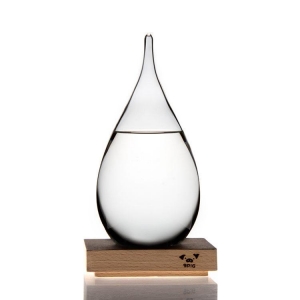
Name: Chlorotrimethylsilane CAS number: 75-77-4 Molecular formula: C3H9ClSi Molecular weight: 108.64 EINECS number: 200-900-5 Mol file: 75-77-4.mol
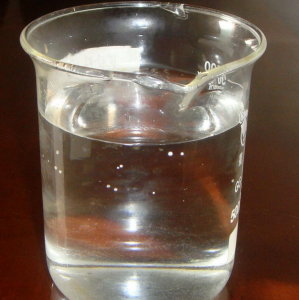
Name: Ethoxytrimethylsilane CAS number: 1825-62-3 Molecular formula: C5H14OSi Molecular weight: 118.25 EINECS number: 217-370-6 Mol file: 1825-62-3.mol
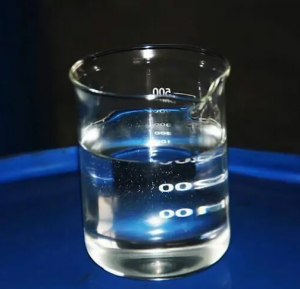
Specification English name: Dimethyldimethoxysilane CAS number: 1112-39-6 Molecular formula: C4H12O2Si Molecular weight: 120.22 EINECS number: 214 189 4 Mol file: 1112-39-6.mol Applications As a structural control agent, chain extender, and filler treatment agent, it is widely used in the treatment of organic silica gel and white carbon black Purpose As a structural control agent, chain extender, and filler treatment agent, it is widely used in the treatment of organic silica gel and white carbon black. This product is used as a structural control agent and chain extender to improve mechanical processing performance, extend the storage time of rubber blends, and can replace hydroxyl silicone oil for use. Widely used in the treatment of organic silicone and white carbon black Purpose Dimethyldimethoxysilane is used as a structural control agent and chain extender to improve mechanical processing performance, extend the storage time of rubber blends, and can replace hydroxy silicone oil....

Properties of trimethyliodosilane Melting point<0 ° C Boiling point 106 ° C (lit.) Density 1.406 g/mL at 25 ° C (lit.) Refractive index n20/D 1.471 (lit.) Flash point − 25 ° F Storage conditions -20 ° C Solubility Reacts Form Liquid Specific gravity 1.47 Clear colors to reddish Water solubility reactions Sensitivity: Moisture&Light Sensitivity Hydrolysis sensitivity 8: Reacts quickly with moisture, water, protoc solvents BRN 1731136 Stability Sensitivity (Reactive) InchiKey CSRZQMIRAZTJOY-UHFFFFAOYSA-N CAS Database 16029-98-4 (CAS DataBase Reference) NIST Chemical Information Iodotrimethylsilane (16029-98-4) EPA Chemical Information Silane, iodotrimethyl - (16029-98-4)
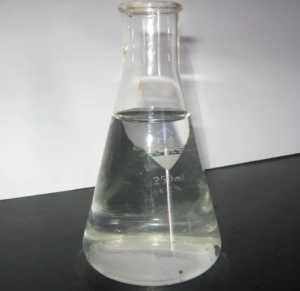
Properties of Hexamethyldisilane Melting point 9-12 ° C (lit.) Boiling point 112-114 ° C (lit.) Density 0.715 g/mL at 25 ° C (lit.) Refractive index n20/D 1.422 (lit.) Flash point 29 ° F Storage conditions Store at<=20 ° C Sol common organic solvents; Insul H2O Form liquid Specific gravity 0.729 Colorless Insoluble in water Double in alcohol, ether and acetone Hydrolysis sensitivity 1: no significant reaction with acute systems BRN 1633463 Stability InchiKey NEXSMEBSBIABKL-UHFFFAOYSA-N CAS Database 1450-14-2 (CAS DataBase Reference) NIST Chemical Substance Information Disilane, hexagonal - (1450-14-2) EPA Chemical Substance Information Disilane, hexagonal - (1450-14-2)
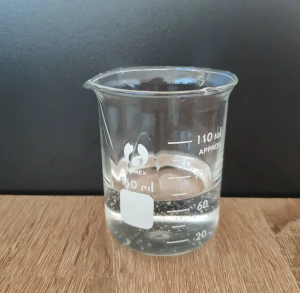
Introduction: Hexamethyldisiloxane (silicone ether, MM sealing agent) is a colorless and transparent liquid that is prone to deliquescence. Insoluble in water, soluble in various organic solvents. Used as silicone oil, silicone rubber, pharmaceuticals, gas chromatography stationary liquids, analytical reagents, hydrophobic agents, etc. Obtained by hydrolysis of trimethylchlorosilane. The physical properties of hexamethyldisiloxane colorless and transparent liquids. Easily deliquescent, flammable, and in contact with high heat, open flames, and strong oxidizing agents, there is a risk of combustion. Boiling point 99.5 ℃. Flash point -1.1 ℃. Relative density (d2525) 0.7606. The refractive index is 1.3750. Insoluble in water, soluble in various organic solvents. Hexamethyldisiloxane is an important primary organic silicon raw material, often used as a capping agent in the production of silicone oil, or as a cleaning agent for silicone rubber, pharmaceuticals, gas c...

Anhui Techchem Industrial Co.,Ltd. will participate in the Shanghai CPHI China 2026 exhibition. The 24th CPHI China 2026 will grandly kick off at the Shanghai New International Expo Center from June 1...
Crunchy kernels of barley tumble from Joel Williamson’s hands as he scoops them up, offering a taste.
“This is a first: The inaugural batch of Lyon malt,” says Williamson, head maltster at Spokane-based craft malting company LINC Malt.
“This is really good,” replies customer Heath Barnes, popping a few grains into his mouth.
Commercial malts are often plain and basic, but craft-malted Lyon is different.
Nutty
and aromatic, this new Washington State University created variety
brings greater depth to beer, explains Barnes, CEO of Washington farmer
cooperative Whitgro, Inc. He arranged for LINC Malt to create this first
batch, letting Lyon malt lend its signature flavors to craft beers
around the Northwest.
Lyon is one of two WSU barley varieties to crack the growing craft malt market. Crop scientists at WSU developed Lyon, for the Palouse country, and Fritz, which thrives in coastal growing areas — both all-round varieties, equally versatile for food, feed and beer.

Breeder Kevin Murphy tours a test plot of barley at WSU’s Spillman Agronomy Farm (Seth Truscott-WSU Photo).
“What we really wanted was something that would work for Northwest craft maltsters,” says Kevin Murphy, WSU barley breeder.
In Washington, barley is a $20 million crop, with about 4.5 million bushels harvested annually. Compared to wheat, chickpeas and other cash crops, such as spinach and potatoes, barley is a low earner, but farmers still turn to this crop to break disease and weed cycles.
“By giving farmers new malt varieties, we’re adding a lot more value to barley,” says Murphy, who currently testing several potentially malt friendly varieties. “It’s all about discovering where these barleys fit best.”
“New malting varieties like Lyon open up a new world of possibilities for growers,” adds Barnes. “In a tough farm economy, that makes all the difference.”
As NZ151, its original breeding designation, Fritz is a personal favorite for many customers at Burlington, Wash., based Skagit Valley Malting, which contracts with farmers for the WSU-licensed variety.
“You wouldn’t expect it, but barley and wheat grow more robustly here than almost anywhere in the world,” says Adam Foy, Skagit Valley Malting’s vice president of business development. “But without malting, the only markets growers had for their barley was food and animal feed.”
Then Steve Jones, director of the WSU Bread Lab, and Wayne Carpenter, Skagit Valley Malting founder, had a lightbulb moment.
“They realized our climate is very similar to Northern Europe, Scotland and the UK, which is known for big, plump, high-extract barley for malting and distilling,” Foy says. “We can grow the same kinds of barley — in fact, even better, thanks to the uniformity of our climate.”
WSU researchers set out to develop special malt varieties, and in 2014, released Fritz, which is exceptional as a malter. Its low protein, crumbliness and chemistry help brewers get more out of the malt, and it helps beer stay stable and dependably flavorful.
Skagit Valley Malting doubled its contract for NZ151 this year, and farmers are growing it organically for the first time.
“Brewers want barleys with different malting and brewing qualities,” says Foy. “Instead of looking for sameness, we’re looking for uniqueness.”
“Brewers and beer lovers are realizing there’s a real story to tell through malt flavors,” says Brian Estes, sales and operations manager at LINC Malt.
“Success is just a matter of getting malts in front of people so they can taste the difference.”

Lyon barley gives Hunga Dunga beer a clean, light and fresh taste, with a rich reddish-gold hue.
Graham Lilly, owner and brewmaster at Hunga Dunga Brewery in Moscow, Idaho — the heart of Northwest wheat country — wanted a malt that evoked the Palouse.
“It makes sense to brew with grains grown close to home,” says Lilly. “I wanted to reap the benefits of geography while supporting the local economy. That’s what my customers are craving.”
He bought Whitgro’s Lyon malt, then set about experimenting to see what it does for a batch of beer.
“We haven’t had an opportunity to do that with a locally grown malt, until now,” Lilly says.
The resulting beer was clean, light and fresh, with a rich reddish-gold hue.
For Murphy, the ice-cold glass of Lilly’s Oatmeal Pale Ale was one of the most satisfying sips of his career. Murphy has released five barley varieties for food and feed, but this is his first brewed into beer.
“What a great feeling to drink a beer with WSU barley as the main ingredient!” said Murphy. “For the growers, the maltsters, and for me — we’ve been waiting a long time for this.”
Anhui Sinotech Industrial Co.,Ltd is a Chemical Fertilizer Supplier,the main products are Feed Fertilizer,Crop Fertilizer etc.Contact us quickly!
 online service
 +8613866722531
 pweiping@techemi.com
 pweiping
 +8613866722531