Application

New Products

  • Trimethylchlorosilane (TMCS)  CAS :75-77-4

    Trimethylchlorosilane (TMCS) CAS :75-77-4

    Name: Chlorotrimethylsilane CAS number: 75-77-4 Molecular formula: C3H9ClSi Molecular weight: 108.64 EINECS number: 200-900-5 Mol file: 75-77-4.mol
  • Trimethylethoxysilane CAS :1825-62-3

    Trimethylethoxysilane CAS :1825-62-3

    Name: Ethoxytrimethylsilane CAS number: 1825-62-3 Molecular formula: C5H14OSi Molecular weight: 118.25 EINECS number: 217-370-6 Mol file: 1825-62-3.mol
  • Dimethyldimethoxysilane CAS1112-39-6 DMDMS

    Dimethyldimethoxysilane CAS1112-39-6 DMDMS

    Specification English name: Dimethyldimethoxysilane CAS number: 1112-39-6 Molecular formula: C4H12O2Si Molecular weight: 120.22 EINECS number: 214 189 4 Mol file: 1112-39-6.mol Applications As a structural control agent, chain extender, and filler treatment agent, it is widely used in the treatment of organic silica gel and white carbon black Purpose As a structural control agent, chain extender, and filler treatment agent, it is widely used in the treatment of organic silica gel and white carbon black. This product is used as a structural control agent and chain extender to improve mechanical processing performance, extend the storage time of rubber blends, and can replace hydroxyl silicone oil for use. Widely used in the treatment of organic silicone and white carbon black Purpose Dimethyldimethoxysilane is used as a structural control agent and chain extender to improve mechanical processing performance, extend the storage time of rubber blends, and can replace hydroxy silicone oil....
  • Iodotrimethylsilane CAS:16029-98-4 (TMIS)

    Iodotrimethylsilane CAS:16029-98-4 (TMIS)

    Properties of trimethyliodosilane Melting point<0 ° C Boiling point 106 ° C (lit.) Density 1.406 g/mL at 25 ° C (lit.) Refractive index n20/D 1.471 (lit.) Flash point − 25 ° F Storage conditions -20 ° C Solubility Reacts Form Liquid Specific gravity 1.47 Clear colors to reddish Water solubility reactions Sensitivity: Moisture&Light Sensitivity Hydrolysis sensitivity 8: Reacts quickly with moisture, water, protoc solvents BRN 1731136 Stability Sensitivity (Reactive) InchiKey CSRZQMIRAZTJOY-UHFFFFAOYSA-N CAS Database 16029-98-4 (CAS DataBase Reference) NIST Chemical Information Iodotrimethylsilane (16029-98-4) EPA Chemical Information Silane, iodotrimethyl - (16029-98-4)
  • Hexamethyldisilane CAS:1450-14-2 (HMD)

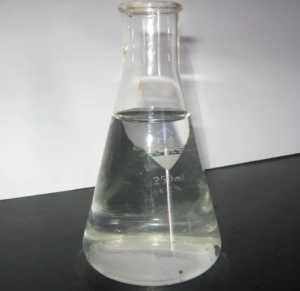
    Hexamethyldisilane CAS:1450-14-2 (HMD)

    Properties of Hexamethyldisilane Melting point 9-12 ° C (lit.) Boiling point 112-114 ° C (lit.) Density 0.715 g/mL at 25 ° C (lit.) Refractive index n20/D 1.422 (lit.) Flash point 29 ° F Storage conditions Store at<=20 ° C Sol common organic solvents; Insul H2O Form liquid Specific gravity 0.729 Colorless Insoluble in water Double in alcohol, ether and acetone Hydrolysis sensitivity 1: no significant reaction with acute systems BRN 1633463 Stability InchiKey NEXSMEBSBIABKL-UHFFFAOYSA-N CAS Database 1450-14-2 (CAS DataBase Reference) NIST Chemical Substance Information Disilane, hexagonal - (1450-14-2) EPA Chemical Substance Information Disilane, hexagonal - (1450-14-2)
  • Hexamethyldisiloxane CAS:107-46-0

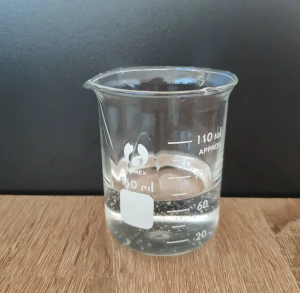
    Hexamethyldisiloxane CAS:107-46-0

    Introduction:  Hexamethyldisiloxane (silicone ether, MM sealing agent) is a colorless and transparent liquid that is prone to deliquescence. Insoluble in water, soluble in various organic solvents. Used as silicone oil, silicone rubber, pharmaceuticals, gas chromatography stationary liquids, analytical reagents, hydrophobic agents, etc. Obtained by hydrolysis of trimethylchlorosilane.  The physical properties of hexamethyldisiloxane  colorless and transparent liquids. Easily deliquescent, flammable, and in contact with high heat, open flames, and strong oxidizing agents, there is a risk of combustion. Boiling point 99.5 ℃. Flash point -1.1 ℃. Relative density (d2525) 0.7606. The refractive index is 1.3750. Insoluble in water, soluble in various organic solvents.  Hexamethyldisiloxane is an important primary organic silicon raw material, often used as a capping agent in the production of silicone oil, or as a cleaning agent for silicone rubber, pharmaceuticals, gas c...

latest news

Anhui Techchem Industrial Co.,Ltd. will participate in the Shanghai CPHI China 2026 exhibition.

Anhui Techchem Industrial Co.,Ltd. will participate in the Shanghai CPHI China 2026 exhibition.

Anhui Techchem Industrial Co.,Ltd. will participate in the Shanghai CPHI China 2026 exhibition. The 24th CPHI China 2026 will grandly kick off at the Shanghai New International Expo Center from June 1...

Uses of citric acid
2022-03-04
1. Food industry
1) Because citric acid has a mild and refreshing sour taste, it is widely used in the manufacture of various beverages, soft drinks, wine, candy, snacks, biscuits, canned juice, dairy products and other foods, and can also be used as an antioxidant for edible oils. At the same time, it improves the sensory properties of food, enhances appetite and promotes the digestion and absorption of calcium and phosphorus in the body.
2) The salts of citric acid such as calcium citrate and ferric citrate are fortifiers that need to add calcium ions and iron ions in some foods.
3) Esters of citric acid, such as triethyl citrate, can be used as non-toxic plasticizers to manufacture plastic films for food packaging, as sour agents and preservatives in beverage and food industries.
2. Industrial application
1) Citric acid can be used as chemical analysis reagent, experimental reagent, chromatographic analysis reagent and biochemical reagent; used as complexing agent, masking agent; used to prepare buffer solution.
2) The use of citric acid or citrate as a builder can improve the performance of washing products, can rapidly precipitate metal ions, prevent pollutants from re-attaching to the fabric, and maintain the necessary alkalinity for washing; disperse and disperse dirt and ash. Suspension; improve the performance of surfactants, is an excellent chelating agent;
3) It can be used as a reagent for testing the acid resistance of architectural ceramic tiles.
4) Citric acid and modified citric acid can be made into a formaldehyde-free anti-wrinkle finishing agent for the anti-wrinkle finishing of pure cotton fabrics. Not only the anti-wrinkle effect is good, but also the cost is low.
5) It also has metal complexing ability, has good complexing ability to metal ions, and is used as a complexing agent and buffer in the electroplating industry.
3. Environmental protection
Citric acid-sodium citrate buffer is used for flue gas desulfurization. Citric acid-sodium citrate buffer solution is a desulfurization absorbent with great development value due to its low vapor pressure, non-toxicity, stable chemical properties, and high absorption rate of SO2.
4. Livestock and poultry feed
Adding citric acid to piglet feed can lead to early weaning, improve feed utilization by 5% to 10%, and increase sow litter size. Adding 1% to 2% citric acid to the diet of growing-finishing pigs can increase daily weight gain, reduce feed-to-meat ratio, improve protein digestibility, reduce back fat thickness, and improve meat quality and carcass characteristics. Rare earth citrate is a new type of high-efficiency feed additive, suitable for pigs, chickens, fish, shrimps, cattle, sheep, rabbits, silkworms and other animals. It can promote animal growth, improve product quality, improve disease resistance and survival rate. Improve the feed conversion rate and shorten the feeding cycle.
5. Cosmetics
Citric acid is a kind of fruit acid. Its main function is to speed up keratin renewal. It is often used in lotions, creams, shampoos, whitening products, anti-aging products, and acne products. The renewal of keratin is helpful for the exfoliation of melanin in the skin, the reduction of pores, and the dissolution of blackheads.
6. Cleaning and descaling
Citric acid has the ability to disinfect, bleach and eliminate fat, it can remove limescale, wipe the surface of kitchen stoves, clean sinks, sewer pipes, glass surface cleaning, etc.
7. Sterilization
The combined action of citric acid and 80°C temperature has a good effect on killing bacterial spores, and can effectively kill bacterial spores polluted in the pipeline of hemodialysis machine. 
与此原文有关的更多信息要查看其他翻译信息,您必须输入相应原文
 
chat now please click here for inquiry
If you have questions or suggestions,please leave us a message,your inquiry will be replied within 12 hours.