


 call us : +8613866722531
 send a message : pweiping@techemi.com

call us : +8613866722531
send a message : pweiping@techemi.com

Name: Chlorotrimethylsilane CAS number: 75-77-4 Molecular formula: C3H9ClSi Molecular weight: 108.64 EINECS number: 200-900-5 Mol file: 75-77-4.mol
Name: Ethoxytrimethylsilane CAS number: 1825-62-3 Molecular formula: C5H14OSi Molecular weight: 118.25 EINECS number: 217-370-6 Mol file: 1825-62-3.mol
Specification English name: Dimethyldimethoxysilane CAS number: 1112-39-6 Molecular formula: C4H12O2Si Molecular weight: 120.22 EINECS number: 214 189 4 Mol file: 1112-39-6.mol Applications As a structural control agent, chain extender, and filler treatment agent, it is widely used in the treatment of organic silica gel and white carbon black Purpose As a structural control agent, chain extender, and filler treatment agent, it is widely used in the treatment of organic silica gel and white carbon black. This product is used as a structural control agent and chain extender to improve mechanical processing performance, extend the storage time of rubber blends, and can replace hydroxyl silicone oil for use. Widely used in the treatment of organic silicone and white carbon black Purpose Dimethyldimethoxysilane is used as a structural control agent and chain extender to improve mechanical processing performance, extend the storage time of rubber blends, and can replace hydroxy silicone oil....
Properties of trimethyliodosilane Melting point<0 ° C Boiling point 106 ° C (lit.) Density 1.406 g/mL at 25 ° C (lit.) Refractive index n20/D 1.471 (lit.) Flash point − 25 ° F Storage conditions -20 ° C Solubility Reacts Form Liquid Specific gravity 1.47 Clear colors to reddish Water solubility reactions Sensitivity: Moisture&Light Sensitivity Hydrolysis sensitivity 8: Reacts quickly with moisture, water, protoc solvents BRN 1731136 Stability Sensitivity (Reactive) InchiKey CSRZQMIRAZTJOY-UHFFFFAOYSA-N CAS Database 16029-98-4 (CAS DataBase Reference) NIST Chemical Information Iodotrimethylsilane (16029-98-4) EPA Chemical Information Silane, iodotrimethyl - (16029-98-4)
Properties of Hexamethyldisilane Melting point 9-12 ° C (lit.) Boiling point 112-114 ° C (lit.) Density 0.715 g/mL at 25 ° C (lit.) Refractive index n20/D 1.422 (lit.) Flash point 29 ° F Storage conditions Store at<=20 ° C Sol common organic solvents; Insul H2O Form liquid Specific gravity 0.729 Colorless Insoluble in water Double in alcohol, ether and acetone Hydrolysis sensitivity 1: no significant reaction with acute systems BRN 1633463 Stability InchiKey NEXSMEBSBIABKL-UHFFFAOYSA-N CAS Database 1450-14-2 (CAS DataBase Reference) NIST Chemical Substance Information Disilane, hexagonal - (1450-14-2) EPA Chemical Substance Information Disilane, hexagonal - (1450-14-2)
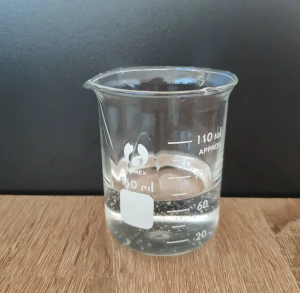
Introduction: Hexamethyldisiloxane (silicone ether, MM sealing agent) is a colorless and transparent liquid that is prone to deliquescence. Insoluble in water, soluble in various organic solvents. Used as silicone oil, silicone rubber, pharmaceuticals, gas chromatography stationary liquids, analytical reagents, hydrophobic agents, etc. Obtained by hydrolysis of trimethylchlorosilane. The physical properties of hexamethyldisiloxane colorless and transparent liquids. Easily deliquescent, flammable, and in contact with high heat, open flames, and strong oxidizing agents, there is a risk of combustion. Boiling point 99.5 ℃. Flash point -1.1 ℃. Relative density (d2525) 0.7606. The refractive index is 1.3750. Insoluble in water, soluble in various organic solvents. Hexamethyldisiloxane is an important primary organic silicon raw material, often used as a capping agent in the production of silicone oil, or as a cleaning agent for silicone rubber, pharmaceuticals, gas c...

Anhui Techchem Industrial Co.,Ltd. will participate in the Shanghai CPHI China 2026 exhibition. The 24th CPHI China 2026 will grandly kick off at the Shanghai New International Expo Center from June 1...
These two kinds of food preservatives have a common feature - large yield and wide use. By convention, let's look at the basic properties first:
"Sodium Benzoate" white powder, slightly benzoin odor, soluble in water, ethanol, molecular weight 144.12
"Potassium sorbate" white powder, odorless or slightly smelly, soluble in water, ethanol, molecular weight 150.22
The second is the scope of use of food additives GB2760-2014:
"Sodium benzoate" can be used in preserves, confectionery, seasonings, beverages (especially carbonated beverages) and other fields, with slightly fewer applications
"Potassium sorbate" can be used in cheese, preserves, candy, bread, pastries, cooked meat products, beverages, seasonings, soyproducts, wine and other fields, the application scene is rich
Let's start with the older sodium benzoate:
sodium benzoate is an acidic preservative, the best pH range is 2.5-4.0, when the pH of food > 4, the preservative effect is very weak.
The reason is that sodium benzoate plays a bacteriostatic role, mainly relying on acid conditions not dissociated sodium benzoate, it is easier to penetrate the cell membrane, interfere with the cell membrane, inhibit the cell respiration enzyme, and then inhibit microbial reproduction.
Sodium benzoate has a wide range of bacteriostatic, can inhibit the reproduction of yeast, mold and some bacteria.
So what foods have a pH between 2.5 and 4.0?
The answer: highly acidic foods, such as carbonated drinks, vinegar and soy sauce;
Limitation of use
In addition to the food field, sodium benzoate is the preferred preservative for many liquid pharmaceutical products. However, sodium benzoate is not suitable for use in meat products because of the pH range and the reaction with some substances in meat products.
The safety of sodium benzoate has been controversial in recent years. For example, according to the toxicological index of oral LD50 in rats, sodium benzoate was 2700mg/kg and potassium sorbate was 4920mg/kg (FAO/WHO, 1994).
At present, sodium benzoate is a food preservative allowed in GB2760, which shows that the Health Commission recognizes the safety of sodium benzoate in food at this stage.
Let's talk about potassium sorbate

potassium sorbate is an acidic preservative. The antiseptic effect is best when the pH is lower than 5 and Potassium sorbate is still good at PH 5-6.
Under acidic conditions, undissociated potassium sorbate can penetrate cell membrane and inhibit intracellular dehydrogenase, thus affecting microbial reproduction.
The "leaky fish" of potassium sorbate, anaerobic bacillus (common in vacuum-packed foods), can be combined with Nisin for preservative effect.
Application case
Vilcon red Sausage potassium sorbate, Lactostreptococcus, sodium dehydroacetate, sodium nitrite
"Hope Barbecue Sausage" potassium sorbate, Lactostreptococcus, sodium nitrite, sodium nitrate, sodium dehydroacetate, sodium diacetate
Limitation of use
With the increase of potassium sorbate concentration, the bacteriostatic rate of potassium sorbate increased obviously. Taking meat enema as an example, the maximum allowable amount of potassium sorbate is 1.5g/kg.
Potassium sorbate can be said to be a food preservative brother, very wide use. Studies have shown that the residual amount of potassium sorbate in the hind legs of slaughtered pigs is 0.069g/kg (Yushan Ma.2006), while the maximum allowable residual amount of potassium sorbate in cooked meat products (except meat sausage) is 0.075g/kg.
The problem of exceeding the standard of potassium sorbate is common in the food industry. How to reduce the dosage, improve the antibacterial effect, still need to combine some compounding knowledge, this aspect will be discussed in detail in the future article.
 online service
 +8613866722531
 pweiping@techemi.com
 pweiping
 +8613866722531