News

New Products

  • Trimethylchlorosilane (TMCS)  CAS :75-77-4

    Trimethylchlorosilane (TMCS) CAS :75-77-4

    Name: Chlorotrimethylsilane CAS number: 75-77-4 Molecular formula: C3H9ClSi Molecular weight: 108.64 EINECS number: 200-900-5 Mol file: 75-77-4.mol
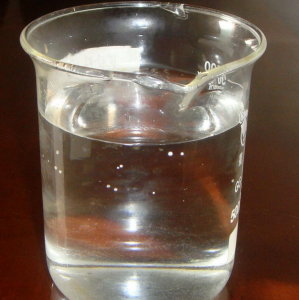
  • Trimethylethoxysilane CAS :1825-62-3

    Trimethylethoxysilane CAS :1825-62-3

    Name: Ethoxytrimethylsilane CAS number: 1825-62-3 Molecular formula: C5H14OSi Molecular weight: 118.25 EINECS number: 217-370-6 Mol file: 1825-62-3.mol
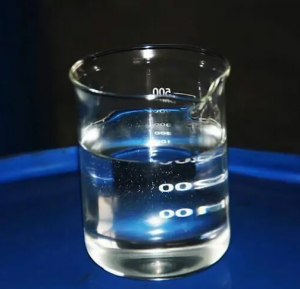
  • Dimethyldimethoxysilane CAS1112-39-6 DMDMS

    Dimethyldimethoxysilane CAS1112-39-6 DMDMS

    Specification English name: Dimethyldimethoxysilane CAS number: 1112-39-6 Molecular formula: C4H12O2Si Molecular weight: 120.22 EINECS number: 214 189 4 Mol file: 1112-39-6.mol Applications As a structural control agent, chain extender, and filler treatment agent, it is widely used in the treatment of organic silica gel and white carbon black Purpose As a structural control agent, chain extender, and filler treatment agent, it is widely used in the treatment of organic silica gel and white carbon black. This product is used as a structural control agent and chain extender to improve mechanical processing performance, extend the storage time of rubber blends, and can replace hydroxyl silicone oil for use. Widely used in the treatment of organic silicone and white carbon black Purpose Dimethyldimethoxysilane is used as a structural control agent and chain extender to improve mechanical processing performance, extend the storage time of rubber blends, and can replace hydroxy silicone oil....
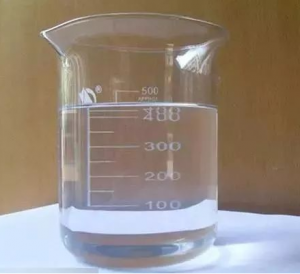
  • Iodotrimethylsilane CAS:16029-98-4 (TMIS)

    Iodotrimethylsilane CAS:16029-98-4 (TMIS)

    Properties of trimethyliodosilane Melting point<0 ° C Boiling point 106 ° C (lit.) Density 1.406 g/mL at 25 ° C (lit.) Refractive index n20/D 1.471 (lit.) Flash point − 25 ° F Storage conditions -20 ° C Solubility Reacts Form Liquid Specific gravity 1.47 Clear colors to reddish Water solubility reactions Sensitivity: Moisture&Light Sensitivity Hydrolysis sensitivity 8: Reacts quickly with moisture, water, protoc solvents BRN 1731136 Stability Sensitivity (Reactive) InchiKey CSRZQMIRAZTJOY-UHFFFFAOYSA-N CAS Database 16029-98-4 (CAS DataBase Reference) NIST Chemical Information Iodotrimethylsilane (16029-98-4) EPA Chemical Information Silane, iodotrimethyl - (16029-98-4)
  • Hexamethyldisilane CAS:1450-14-2 (HMD)

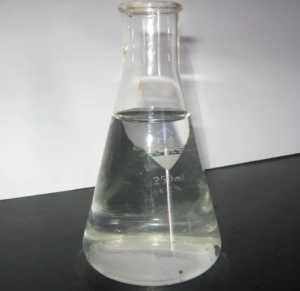
    Hexamethyldisilane CAS:1450-14-2 (HMD)

    Properties of Hexamethyldisilane Melting point 9-12 ° C (lit.) Boiling point 112-114 ° C (lit.) Density 0.715 g/mL at 25 ° C (lit.) Refractive index n20/D 1.422 (lit.) Flash point 29 ° F Storage conditions Store at<=20 ° C Sol common organic solvents; Insul H2O Form liquid Specific gravity 0.729 Colorless Insoluble in water Double in alcohol, ether and acetone Hydrolysis sensitivity 1: no significant reaction with acute systems BRN 1633463 Stability InchiKey NEXSMEBSBIABKL-UHFFFAOYSA-N CAS Database 1450-14-2 (CAS DataBase Reference) NIST Chemical Substance Information Disilane, hexagonal - (1450-14-2) EPA Chemical Substance Information Disilane, hexagonal - (1450-14-2)
  • Hexamethyldisiloxane CAS:107-46-0

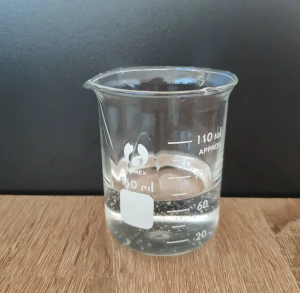
    Hexamethyldisiloxane CAS:107-46-0

    Introduction:  Hexamethyldisiloxane (silicone ether, MM sealing agent) is a colorless and transparent liquid that is prone to deliquescence. Insoluble in water, soluble in various organic solvents. Used as silicone oil, silicone rubber, pharmaceuticals, gas chromatography stationary liquids, analytical reagents, hydrophobic agents, etc. Obtained by hydrolysis of trimethylchlorosilane.  The physical properties of hexamethyldisiloxane  colorless and transparent liquids. Easily deliquescent, flammable, and in contact with high heat, open flames, and strong oxidizing agents, there is a risk of combustion. Boiling point 99.5 ℃. Flash point -1.1 ℃. Relative density (d2525) 0.7606. The refractive index is 1.3750. Insoluble in water, soluble in various organic solvents.  Hexamethyldisiloxane is an important primary organic silicon raw material, often used as a capping agent in the production of silicone oil, or as a cleaning agent for silicone rubber, pharmaceuticals, gas c...

latest news

Anhui Techchem Industrial Co.,Ltd. will participate in the Shanghai CPHI China 2026 exhibition.

Anhui Techchem Industrial Co.,Ltd. will participate in the Shanghai CPHI China 2026 exhibition.

Anhui Techchem Industrial Co.,Ltd. will participate in the Shanghai CPHI China 2026 exhibition. The 24th CPHI China 2026 will grandly kick off at the Shanghai New International Expo Center from June 1...

India: Import restrictions to be imposed Cochin Port Trust
2018-05-30
Cochin Port Trust is no longer among the ports notified by the Union Government to import chemicals and intermediates covered under the Insecticides Act of 1968. The logistics involved in sourcing such goods from distant ports like Mumbai and Chennai is bound to push up prices, of both raw materials and finished products.

The port restriction is expected to reflect in the prices of products like pesticides, paint, thinners, laminates, synthetic fibres, detergents, lubricants, formaldehyde and various other items manufactured largescale, particularly in the pharmaceutical and agrochemical sectors. As 901 chemicals, depending on demand, were being imported through notified ports, the decision to de-notify Cochin Port Trust (CPT) will serve as a major setback for companies in Kerala and parts of Tamil Nadu and Karnataka.

Customs officers said copper sulphate, methanol and ethylene dichloride (EDC) were among chemicals and intermediates being imported through the CPT by various manufacturing companies in South India. These companies will now have to depend on notified ports and airports – the number of which has been reduced to six from 14. The restriction will also bleed the coffers of the Cochin Customs House. Officers said Customs here had been collecting a revenue of around Rs 100-150 crore as duty through the import of insecticides annually.

Chiefly, dual-use chemicals – which can be used for both beneficial and harmful purposes – were imported through CPT. Industries in Coimbatore, Salem and the plantation sector in and outside the state had been depending on the port for the import of chemicals, said a Custom officer.
Although the Hindustan Insecticides Limited (HIL), Udyogamandal, is yet to receive an official communication in this regard, M S Anil, the unit head, said: “We have been importing various intermediates required for the production of weedicides like glycophytes from countries like China through the Cochin Port. If port restriction is introduced, the company will have to spend more on logistics, which may lead to a price rise in various farm products by at least 20 per cent.”

Representatives of agrochemical distributors said the state’s plantation sector has been heavily dependant on chemicals like copper sulphate, among the items imported in bulk through CPT. Though it is too early to pinpoint the price fluctuation, under normal circumstances, the companies will need to factor in at least 500 km of additional transportation.

With rule 45 of the Insecticide Rules, 1971 – which governs the places of Import of Insecticide into India – being amended by the Insecticides (Fourth Amendment) Rule 2017, as notified by the Ministry of Agriculture and Farmer Welfare, the import of insecticides has now been restricted to Inland Container Depot, Gurugram (Gurgaon), Chennai Port, Jawaharlal Nehru Port and Mumbai Port (Mumbai).

The import of insecticides by air is now restricted to Chennai, Mumbai and New Delhi international airports. “Consequently, Kochi is no longer a notified port for the import of insecticides appearing in the schedule of the Insecticides Act, 1968,” said Sumit Kumar, Commissioner of Customs. According to a senior officer at the Directorate General of Foreign Trade (DGFT), there are allegations some importers have been making hazardous pesticides locally after importing various chemicals through the port. Besides, there is no Central Pollution Control Board recognised labs here to test the consignments shipped into the state, experts said.

Average agrochemical consumption of Kerala, according to 2016 KAU study
Insecticide 326.961 tonnes
Fungicide 401.046 tonnes
Weedicide 165.103 tonnes
Rodenticide 1.421 tonnes
Inorganic 4,10,505 lakh
fertilizer tonnes

RESTRICTIONS IMPOSED

No insecticide shall be imported into India except through one of the followingplaces

(i) Inland Container Depot, Gurugram (Gurgaon), Haryana

(ii) Chennai Port, Jawaharlal Nehru Port and Mumbai Port (Mumbai), in respectof insecticides imported by sea

(iii) Chennai International Airport (Chennai), Chhatrapati Shivaji International Airport (Mumbai), Indira
Gandhi International Airport (New Delhi), in respect of insecticides imported by air

Prior to the amendment of the nsecticide Rules, 1971, Kochi was among the notified ports for the import
of insecticides listed in the schedule of Insecticide Act, 1968 by sea
 
chat now please click here for inquiry
If you have questions or suggestions,please leave us a message,your inquiry will be replied within 12 hours.