Formic acid
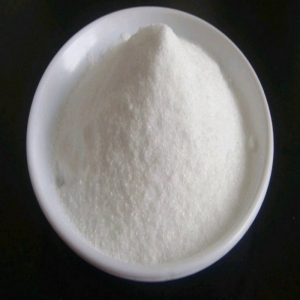
Formic acid is one of the basic organic chemical raw materials, widely used in pesticides, leather, dyes, pharmaceuticals and rubber industries.
 call us : +8613866722531
 send a message : pweiping@techemi.com

Name: Chlorotrimethylsilane CAS number: 75-77-4 Molecular formula: C3H9ClSi Molecular weight: 108.64 EINECS number: 200-900-5 Mol file: 75-77-4.mol
Name: Ethoxytrimethylsilane CAS number: 1825-62-3 Molecular formula: C5H14OSi Molecular weight: 118.25 EINECS number: 217-370-6 Mol file: 1825-62-3.mol
Specification English name: Dimethyldimethoxysilane CAS number: 1112-39-6 Molecular formula: C4H12O2Si Molecular weight: 120.22 EINECS number: 214 189 4 Mol file: 1112-39-6.mol Applications As a structural control agent, chain extender, and filler treatment agent, it is widely used in the treatment of organic silica gel and white carbon black Purpose As a structural control agent, chain extender, and filler treatment agent, it is widely used in the treatment of organic silica gel and white carbon black. This product is used as a structural control agent and chain extender to improve mechanical processing performance, extend the storage time of rubber blends, and can replace hydroxyl silicone oil for use. Widely used in the treatment of organic silicone and white carbon black Purpose Dimethyldimethoxysilane is used as a structural control agent and chain extender to improve mechanical processing performance, extend the storage time of rubber blends, and can replace hydroxy silicone oil....
Properties of trimethyliodosilane Melting point<0 ° C Boiling point 106 ° C (lit.) Density 1.406 g/mL at 25 ° C (lit.) Refractive index n20/D 1.471 (lit.) Flash point − 25 ° F Storage conditions -20 ° C Solubility Reacts Form Liquid Specific gravity 1.47 Clear colors to reddish Water solubility reactions Sensitivity: Moisture&Light Sensitivity Hydrolysis sensitivity 8: Reacts quickly with moisture, water, protoc solvents BRN 1731136 Stability Sensitivity (Reactive) InchiKey CSRZQMIRAZTJOY-UHFFFFAOYSA-N CAS Database 16029-98-4 (CAS DataBase Reference) NIST Chemical Information Iodotrimethylsilane (16029-98-4) EPA Chemical Information Silane, iodotrimethyl - (16029-98-4)
Properties of Hexamethyldisilane Melting point 9-12 ° C (lit.) Boiling point 112-114 ° C (lit.) Density 0.715 g/mL at 25 ° C (lit.) Refractive index n20/D 1.422 (lit.) Flash point 29 ° F Storage conditions Store at<=20 ° C Sol common organic solvents; Insul H2O Form liquid Specific gravity 0.729 Colorless Insoluble in water Double in alcohol, ether and acetone Hydrolysis sensitivity 1: no significant reaction with acute systems BRN 1633463 Stability InchiKey NEXSMEBSBIABKL-UHFFFAOYSA-N CAS Database 1450-14-2 (CAS DataBase Reference) NIST Chemical Substance Information Disilane, hexagonal - (1450-14-2) EPA Chemical Substance Information Disilane, hexagonal - (1450-14-2)
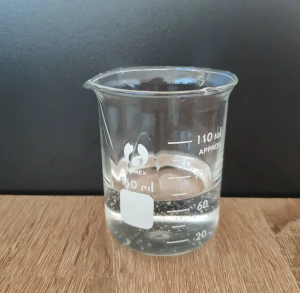
Introduction: Hexamethyldisiloxane (silicone ether, MM sealing agent) is a colorless and transparent liquid that is prone to deliquescence. Insoluble in water, soluble in various organic solvents. Used as silicone oil, silicone rubber, pharmaceuticals, gas chromatography stationary liquids, analytical reagents, hydrophobic agents, etc. Obtained by hydrolysis of trimethylchlorosilane. The physical properties of hexamethyldisiloxane colorless and transparent liquids. Easily deliquescent, flammable, and in contact with high heat, open flames, and strong oxidizing agents, there is a risk of combustion. Boiling point 99.5 ℃. Flash point -1.1 ℃. Relative density (d2525) 0.7606. The refractive index is 1.3750. Insoluble in water, soluble in various organic solvents. Hexamethyldisiloxane is an important primary organic silicon raw material, often used as a capping agent in the production of silicone oil, or as a cleaning agent for silicone rubber, pharmaceuticals, gas c...

Anhui Techchem Industrial Co.,Ltd. will participate in the Shanghai CPHI China 2026 exhibition. The 24th CPHI China 2026 will grandly kick off at the Shanghai New International Expo Center from June 1...
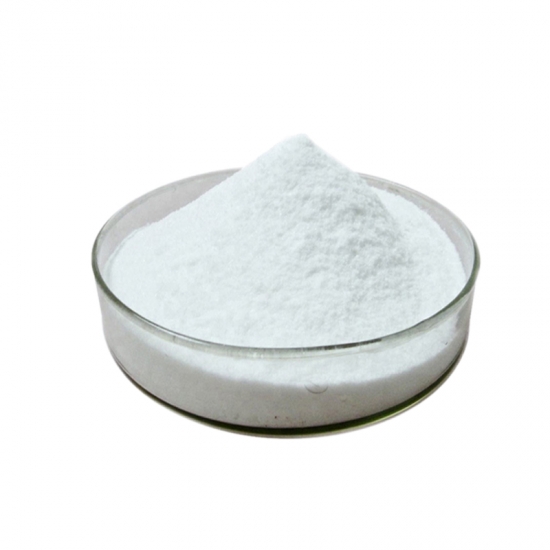
Description:
Aminophenol is also called hydroxyaniline and aminohydroxybenzene. There are 3 isomers, namely o-aminophenol, m-aminophenol, p-aminophenol. In 1874, Baeyer et al first prepared p-aminophenol. Due to the different relative positions of hydroxyl and amino groups, the three are also different in physicochemical properties. This product is weakly alkaline, weakly acidic and strongly reducing. Because it has two groups of amino group and phenol at the same time, it has the commonality of both. Very unstable in air and sunlight, especially sensitive to oxygen in humid air, especially the ortho and para positions are more easily oxidized to deepen the color, mainly to generate aminophenoxazine derivatives after oxidation.
Molecular structure:

Formic acid is one of the basic organic chemical raw materials, widely used in pesticides, leather, dyes, pharmaceuticals and rubber industries.
MSG Industrial Cell-mass is a good protein source and substitute of animal sourced protein (e.g. fish meal, pork meal, etc.) in pourtry, livestocks, and aquafeed industries.
4-Aminophenol (or para-aminophenol or p-aminophenol) is the organic compound with the formula H2NC6H4OH. Typically available as a white powder,[2] it was commonly used as a developer for black-and-white film, marketed under the name Rodinal.
TNPP is packed in 200Kg Steel Drums. Store in a cool and dry place, keep container closed when not in use.
Light yellow to amber transparent liquid,slightly soluble in water,soluble in alcohol,ether,ketone and other polar organic solvents,with polyehter,polyester polyol compatibility is good.
We have produced chemical more than fifteen years., 80% products are for export .
para-Anisidine (p-anisidine) is an organic compound with the formula CH3OC6H4NH2. A white solid, commercial samples can appear grey-brown owing to air oxidation.
Nitroguanidine is a colorless crystalline solid,Soluble in hot water, insoluble in cold water, slightly soluble in ethanol, insoluble in ether, soluble in lye.

 online service
 +8613866722531
 pweiping@techemi.com
 pweiping
 +8613866722531