


 call us : +8613866722531
 send a message : pweiping@techemi.com

call us : +8613866722531
send a message : pweiping@techemi.com

Name: Chlorotrimethylsilane CAS number: 75-77-4 Molecular formula: C3H9ClSi Molecular weight: 108.64 EINECS number: 200-900-5 Mol file: 75-77-4.mol
Name: Ethoxytrimethylsilane CAS number: 1825-62-3 Molecular formula: C5H14OSi Molecular weight: 118.25 EINECS number: 217-370-6 Mol file: 1825-62-3.mol
Specification English name: Dimethyldimethoxysilane CAS number: 1112-39-6 Molecular formula: C4H12O2Si Molecular weight: 120.22 EINECS number: 214 189 4 Mol file: 1112-39-6.mol Applications As a structural control agent, chain extender, and filler treatment agent, it is widely used in the treatment of organic silica gel and white carbon black Purpose As a structural control agent, chain extender, and filler treatment agent, it is widely used in the treatment of organic silica gel and white carbon black. This product is used as a structural control agent and chain extender to improve mechanical processing performance, extend the storage time of rubber blends, and can replace hydroxyl silicone oil for use. Widely used in the treatment of organic silicone and white carbon black Purpose Dimethyldimethoxysilane is used as a structural control agent and chain extender to improve mechanical processing performance, extend the storage time of rubber blends, and can replace hydroxy silicone oil....
Properties of trimethyliodosilane Melting point<0 ° C Boiling point 106 ° C (lit.) Density 1.406 g/mL at 25 ° C (lit.) Refractive index n20/D 1.471 (lit.) Flash point − 25 ° F Storage conditions -20 ° C Solubility Reacts Form Liquid Specific gravity 1.47 Clear colors to reddish Water solubility reactions Sensitivity: Moisture&Light Sensitivity Hydrolysis sensitivity 8: Reacts quickly with moisture, water, protoc solvents BRN 1731136 Stability Sensitivity (Reactive) InchiKey CSRZQMIRAZTJOY-UHFFFFAOYSA-N CAS Database 16029-98-4 (CAS DataBase Reference) NIST Chemical Information Iodotrimethylsilane (16029-98-4) EPA Chemical Information Silane, iodotrimethyl - (16029-98-4)
Properties of Hexamethyldisilane Melting point 9-12 ° C (lit.) Boiling point 112-114 ° C (lit.) Density 0.715 g/mL at 25 ° C (lit.) Refractive index n20/D 1.422 (lit.) Flash point 29 ° F Storage conditions Store at<=20 ° C Sol common organic solvents; Insul H2O Form liquid Specific gravity 0.729 Colorless Insoluble in water Double in alcohol, ether and acetone Hydrolysis sensitivity 1: no significant reaction with acute systems BRN 1633463 Stability InchiKey NEXSMEBSBIABKL-UHFFFAOYSA-N CAS Database 1450-14-2 (CAS DataBase Reference) NIST Chemical Substance Information Disilane, hexagonal - (1450-14-2) EPA Chemical Substance Information Disilane, hexagonal - (1450-14-2)
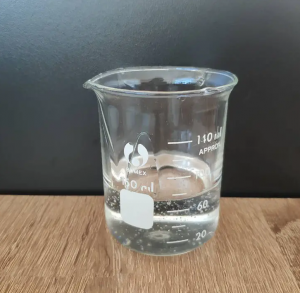
Introduction: Hexamethyldisiloxane (silicone ether, MM sealing agent) is a colorless and transparent liquid that is prone to deliquescence. Insoluble in water, soluble in various organic solvents. Used as silicone oil, silicone rubber, pharmaceuticals, gas chromatography stationary liquids, analytical reagents, hydrophobic agents, etc. Obtained by hydrolysis of trimethylchlorosilane. The physical properties of hexamethyldisiloxane colorless and transparent liquids. Easily deliquescent, flammable, and in contact with high heat, open flames, and strong oxidizing agents, there is a risk of combustion. Boiling point 99.5 ℃. Flash point -1.1 ℃. Relative density (d2525) 0.7606. The refractive index is 1.3750. Insoluble in water, soluble in various organic solvents. Hexamethyldisiloxane is an important primary organic silicon raw material, often used as a capping agent in the production of silicone oil, or as a cleaning agent for silicone rubber, pharmaceuticals, gas c...
We Skipped Canton Fair Phase 3 — But You Can Still Source SLES, Food and Feed Additives From Us Online The 140th Canton Fair is now in its third and final phase, running 31 October – 4 Nov...
China's silicone DMC market closed the pre-holiday week in a stalemate. Mainstream monomer producers held offers at 14,400–15,000 yuan per tonne, with some spot deals concluded 200–300 yuan lower. Behind the flat price line sits a tighter picture: industry operating rates are running at roughly 62.7%, well below the historical average for this time of year, and emission-reduction policies are keeping monomer plants from running full.
For buyers of silicone intermediates and downstream products, this combination — firm prices, constrained supply, and hesitant demand — is a specific kind of market. It rewards planning and punishes spot panic buying. Here is what the numbers say and what to do about them.
Three data points matter more than the headline price:
That last point deserves attention. When 107 rubber trades at or below its own feedstock, downstream converters are running at negative or zero margin. Several sealant producers issued price-increase letters this month, but with the terminal construction sector still soft, most of those increases have not been accepted by buyers.
The tightness is policy-driven, not demand-driven — and that distinction shapes how long it lasts.
On the supply side, monomer plants face emission-reduction constraints that limit run rates. Producers describe low inventories and pre-sold orders extending into mid-to-late October. Some compounders, worried about running out of material after the holiday, have been building small positions in recent sessions.
On the demand side, buying has been strictly just-in-time. Construction sealants, textiles and electronics remain weak. High costs are suppressing restocking appetite, and most buyers are waiting rather than chasing. New energy and photovoltaic sealant applications show more resilience, but they are not large enough to move the whole market.
The result is a standoff: producers with low inventory and policy-capped output want to hold prices; buyers with thin order books refuse to pay up. Neither side has reason to blink before the holiday.
Practical steps for procurement teams sourcing silicone intermediates in this market:
We supply organosilicon intermediates across the methyl, phenyl and vinyl series, including decamethylcyclopentasiloxane (D5) and functional silanes such as methylphenyldimethoxysilane. Chlorosilane feedstocks including dichlorodimethylsilane are available in drum and bulk quantities.
Browse the full fine chemical intermediates range for silicone, silane and specialty materials. Batch COA and MSDS accompany every shipment.
Two variables will decide the direction:
Under the current joint emission-reduction arrangement, most market participants expect limited movement in either direction — a narrow range rather than a trend. For buyers, that argues for steady coverage over speculative timing.
Planning Q4 silicone purchases? Tell us your grade, quantity and delivery window and we will quote against current availability. Request a quotation.
Source: SMM (Shanghai Metals Market), "Silicone Weekly Review", 24 September 2026; Mysteel industrial silicon monthly analysis, 29 September 2026; Organosilicon Market pre-holiday update, 30 September 2026. Read the SMM original at news.metal.com.
 online service
 +8613866722531
 pweiping@techemi.com
 pweiping
 +8613866722531